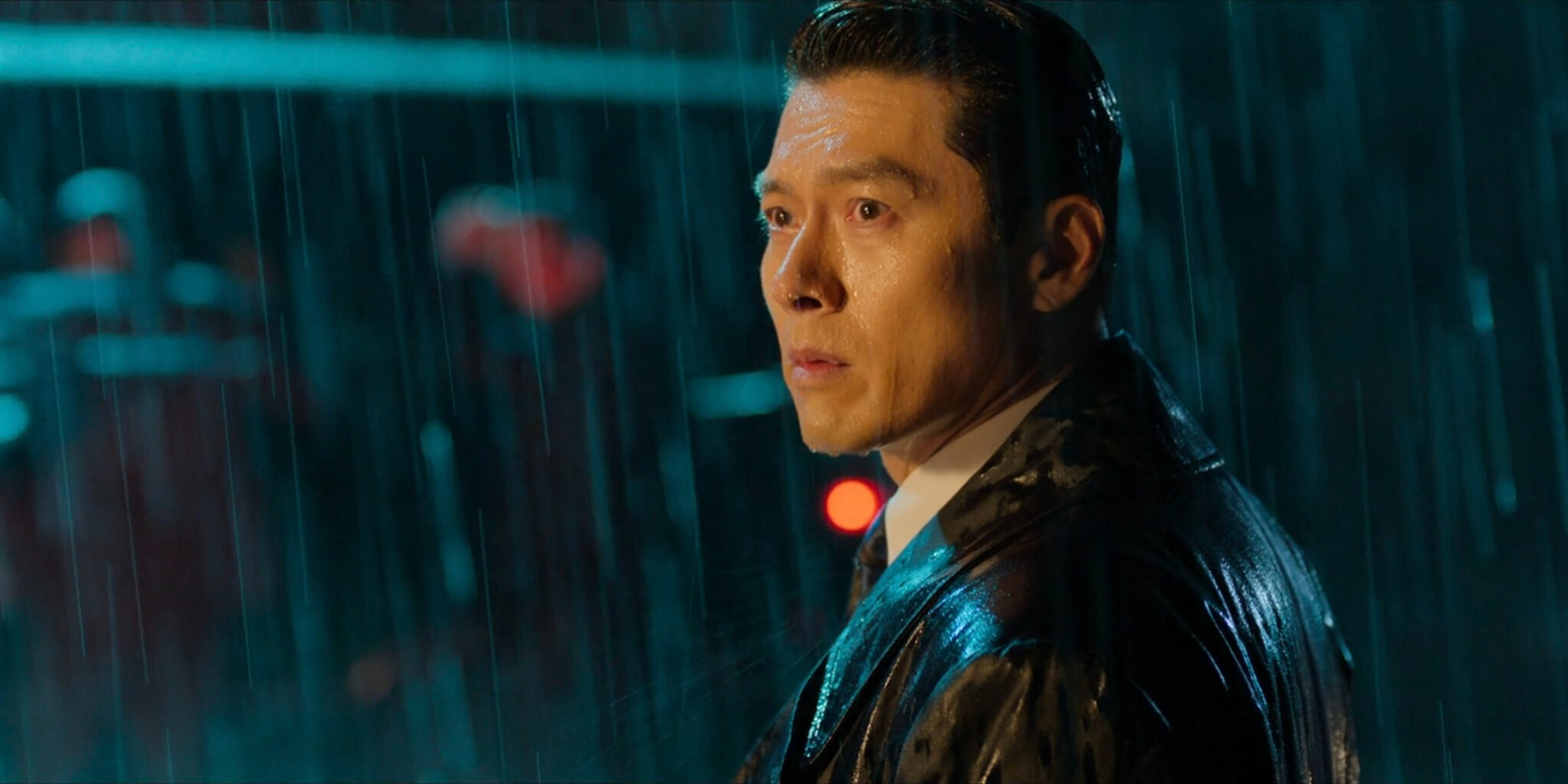
The must-watch K-Drama of 2026 has arrived. In the drought of K-Dramas, Disney+’s most-watched Korean original, “Made in Korea,” is back. “Made in Korea” Season 2 delivers a product consistent with its first season, succeeding in the oft-shot endeavor of creating one seamless show.
The slick noir takes you into the inner rooms of a power vacuum—where weighted looks are exchanged across tables, and lust for power and control blurs the line between ally and adversary. The inciting incident? The president’s assassination, which sends officials into slicing maneuvers aimed at upturning the country’s system in their favor. Under the flimsy label of patriotism, they “work in the shadows to defend our sunlit land.” This tale of survival in political instability masters the art of suspense through its tone, acting, and pacing.
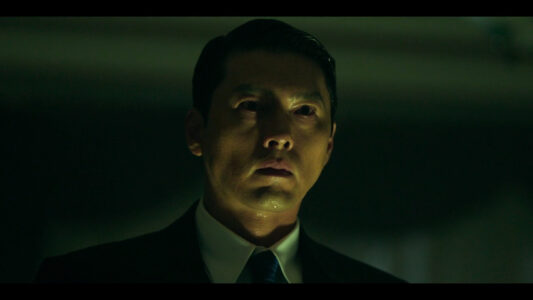
Hyun Bin’s chilling performance as Baek Ki-tae.
Season 2: Key Shifts from Season 1
Spoilers ahead.
Season 2 resumes nine years later in a similar political state. But for our cast, it’s a vastly different decade, and the series doesn’t waste time articulating how they rose in rank.
Baek Ki-tae remains unfazed in public, unhinged in private. As Deputy Director of the Korean Central Intelligence Agency (KCIA), he soon rises to acting director after orchestrating his superior’s arrest for shooting and killing the president.
Jang Geon-yeong and Choi Yu-ji have spent the past seven years lying in wait. Choi Yu-ji succeeds in claiming her father’s seat. Ex-con Jang spent the past seven years in apartment construction, leaving him a self-proclaimed invalid. Under the guise of his hidden existence, he bides his time deep in the grime of gathering evidence by unofficial means. By the end of Episode 2, Jang, now reinstated as Special Advisor to the Joint Investigation Headquarters (JIH), returns ready to rip at his enemies’ throats.
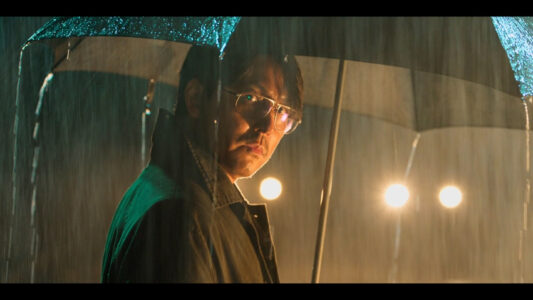
Jang Geon-young returns.
For the first time, there are tensions between Jang and his old partner, Oh. The good old days are over. Oh Ye-jin, now a seasoned prosecutor, has come a long way since the first season. No longer Jang’s timid shadow, Oh heads the chase to catch the meth circulation in Busan and will move heaven and earth to get the job done. While Ye-jin holds a fierce belief that everyone deserves dignity, a changed Jang, once sensitive, has lost his care for how he handles people, enlisting tactics like torture against his enemies’ allies.
Baek So-yeong, Ki-tae’s sister, is at first unrecognizable as a forerunner for the KCIA’s drug ring. Adorned in pearls and heavy makeup, with a maid in her stained-glass-paneled house, So-yeong is later revealed to have developed a severe meth addiction—the same product she aids Ki-tae in circulating.
But the most interesting development is that of the youngest brother, Baek Ki-hyun, who has become lieutenant colonel of the JIH, a position that tests his wavering loyalty to both his brother and his upright morals.
The new season also introduces a new character, Madam Shin, played by Jang Hye-jin (“Parasite”).
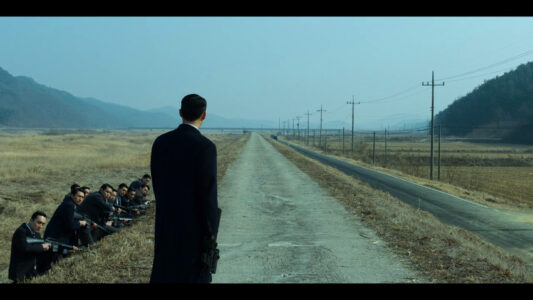
Baek Ki-tae and the KCIA waiting to ambush the JIH.
“Made in Korea” is no passive watch or background show. Its dense exposition holds viewers to the expectation of close concentration. This sets it apart from most shows on streaming platforms; the series doesn’t sacrifice story for attention span.
Here is some helpful historical context for Season 2:
The Yushin Regime and President Park Chung-hee’s Assassination:
Busan and Masan protests: In the opening episode, Baek Ki-tae’s backseat window provides a front-row seat to police cracking down on protesters. He sighs at the holdup, unconcerned by the brutal and bloody beatdowns that are blocking the road. Protesters are nothing but an inconvenience to officials like Baek.
Baek Ki-tae moments before the protests interfere with his drive.
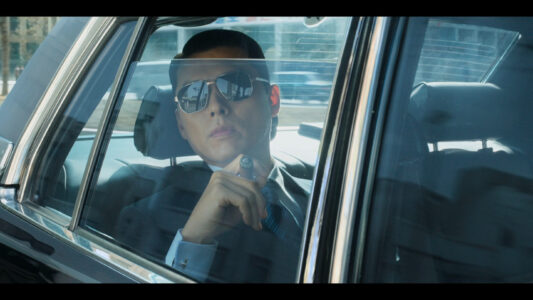
Baek Ki-tae moments before the protests interfere with his drive.
October 16–20, 1979: In response to abuse of power, citizens and students in Busan, Masan, and Changwon staged mass protests in an anti-dictatorship struggle for democracy. The Park Chung-hee regime responded by proclaiming martial law in Busan on October 18 and the Garrison Act in Masan and Changwon on the 20th. In the wake of the uprising, President Park Chung-hee was shot and killed by the head of the Central Intelligence Agency, Kim Jae-gyu, marking the end of the Yushin regime on October 26.
Presidential slush funds:
“In the end, the only thing that changes the world is money. Trust, confidence, loyalty, even people…all of these things can be bought with money.” —Jang Geon-young, Season 2, Episode 3
Season 2 reveals that nine years of exporting Korean-manufactured meth to Japan amassed 70 billion won ($51 million). The money is meant to secure the presidency for Ki-tae’s boss, Cheon Seok-joong, Chief of the Presidential Security Service. Funnily enough, the show’s reported budget is the same amount as the fictional slush fund, marking “Made in Korea” as the most expensive K-Drama yet, according to the Korea Herald. In the past half-century, Korea’s economy has sure come a long way.
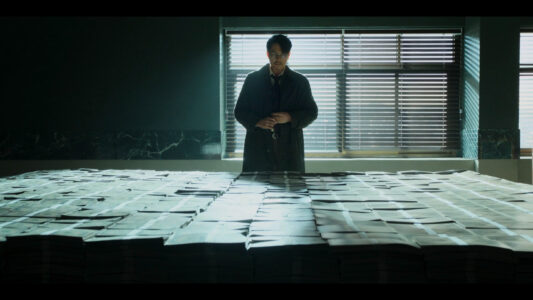
Jang Geon-young with the 70 billion won slush fund.
The story mirrors the political scandals of former South Korean president Roh Tae-woo and dictator general Chun Doo-hwan. Roh collected a slush fund of $667 million, and Chun, 220.5 billion won ($189 million).
Chun Doo-hwan, like the ruthless Hwang Dae-sik, ruled South Korea after the 1979 coup d’état. Convicted of corruption, mutiny, and treason, Chun received a death sentence in 1995 but was later pardoned in 1997.
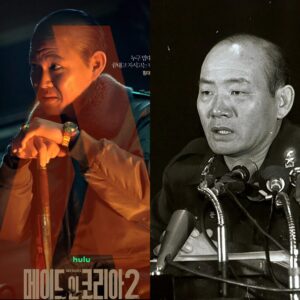
Chun Doo-hwan (right), whose receding hairline closely resembles “Made in Korea’s” Hwang Dae-sik’s greased-back hair. Image credit: Disney+ Korea and the New York Times.
The Ending
Jang and Baek, alas, face off. Then, their decade-long duel ends in Baek’s death. As predicted, Baek’s final moments parallel Jang’s from the first season’s finale. But the plot twist? Ki-tae’s killer.
Viewers were incredulous that the show killed off Hyun Bin’s beloved antihero. Even Son Ye-jin, Hyun Bin’s wife, liked a post critiquing the show’s ending that reads, “Is this really the end? The birth of a bizarre work. The shocking ending of ‘Made in Korea 2’ brings viewers’ ‘Casino (Big Bet)’ nightmares back.”
These complaints pose double-edged critiques: As Ki-tae dies, Jang’s bittersweet victory feels hollow. Both betrayed their values; one stands, one falls. After being pawned by the real antagonist—the polluted political system—both have lost. And Korea’s ruling force remains no less corrupt. You can’t help but hear the echo of Jang’s question from Season 1: What was it all for?
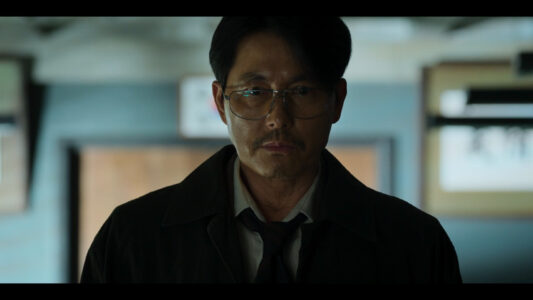
Jang Geon-young, Season 2, Episode 3.
The show punctuates Ki-tae’s tragic death with his late character development. In the final episode, Ki-tae changes more rapidly in its final five minutes than he did throughout all of Seasons 1 and 2. As the minutes wind down, Baek shoots Pyo and Jang in the limbs rather than ending their lives, something Season 1 Ki-tae would have done without hesitation. Turns out, Baek still has soft spots—ones Jang and Hwang fatally exploit. With a gunshot wound to the gut, Ki-tae’s evasive moves are no longer an option. Cornered, he stops calculating and starts to crack.
And when he comes face-to-face with the muzzle of his brother Ki-hyun’s gun, in one last honorable act, he surrenders. In a life of shifting loyalties, he never turned on his younger brother. This is the reality of a torn society where resistance is helpless, and integrity is the courage to give up your life to your brother, who pulls the trigger.
If there’s one thing the show does best, it’s stretching suspense until the very end. The screen goes dark. The unaccompanied gunshot, followed by a monochrome flashback scene, suggests that Ki-hyun kills Ki-tae, but the show omits the shot. We don’t actually see the younger brother shoot, nor are we shown Baek Ki-tae’s body. Which means the possibility of a third season hasn’t been ruled out.
How I felt all throughout watching “Made in Korea.”
Whether or not that’s the last of Baek Ki-tae we’ll see, Hyun Bin gives the character a fitting send-off. As the character he inhabited longer than any previous role, Baek Ki-tae will always feel special, Hyun Bin shared with Elle Korea.
“This story is ultimately about the conflicts that arise between individuals who hold different beliefs and methods,” he says. “Reality is not much different from the story in this project.” Rather than dividing who is right or wrong, Hyun Bin hopes viewers will ask themselves, “How should I understand and view someone who has different thoughts and beliefs from me? Isn’t that what we need for a better era and life in our current times?”