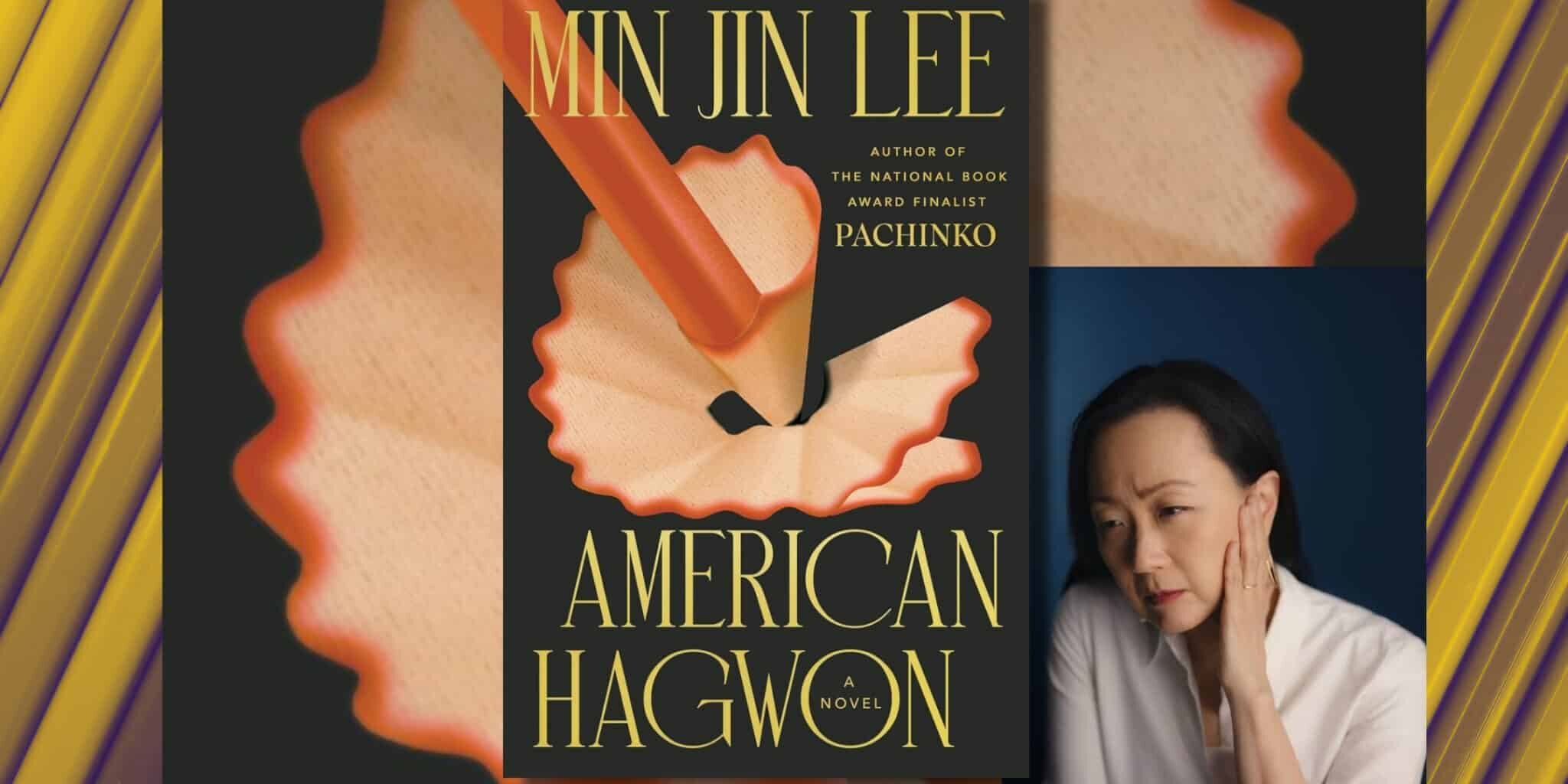
Nearly a decade after “Pachinko” established Min Jin Lee as one of the essential chroniclers of the Korean diaspora, she returns with a panoramic family saga about the generation shaped by the 1997 Asian financial crisis and its aftermath.
What kind of people are we becoming? That question quietly runs beneath every page of Min Jin Lee’s long-awaited third novel, “American Hagwon.” At first glance, the story appears to be about education. Hagwons, admissions, SKY universities, Ivy League aspirations, and educational anxiety fill its pages. But Lee is after something larger: the families, institutions, and inherited ideas that teach us what a successful life is supposed to look like and what we are willing to sacrifice to achieve it.
A hagwon is a Korean private academy, commonly described as a cram school, though the English translation hardly conveys the place such schools occupy in Korean life. In “American Hagwon,” it becomes a vehicle for ambition, fear, sacrifice, survival, and hope that crosses oceans and generations.
The World We Inherit
The novel follows the Koh family, John, Helen, and their three children, Bo, DH, and Mido. A devastating betrayal has upended their middle-class life in Seoul, and the family desperately searches for opportunity across the ocean in Southern California. For many Korean American readers, the novel will feel deeply familiar because Lee captures Korean immigrant realities rarely depicted with such precision. Her characters move between Korean and American social rules, expectations, and definitions of success, sometimes within a single conversation. Lee captures the awareness of age and hierarchy, the obligations embedded in relationships, the anxiety of causing offense, and the sudden intimacy that can arise from a few Korean words exchanged between people who understand their significance. These moments feel less like observation than recognition.
Lee is equally attentive to class. In the United States, educational and professional success can obscure the range of Korean American experiences. “American Hagwon” is populated by chaebol heirs and immigrants, professionals and workers, entrepreneurs, students, and families struggling for stability. Across continents and decades, class shapes everything. Immigration alters the terrain without erasing the habits of thought people carry with them.
The Korean church occupies a central place in this landscape. For many immigrants, churches provided friendship, childcare, practical help, business connections, and a sense of home. They also became substitute social hierarchies where status, influence, and cultural identity became deeply intertwined with faith. Some characters rise through ambition and social skill. Others quietly embody faith through generosity, humility, sacrifice, and service. Lee sees the distinction between religious institutions and spiritual conviction with unusual clarity. Korean church culture and Christian faith are deeply intertwined, yet never entirely the same thing.
The Price of Getting Ahead
Education touches nearly every family. Lee writes with deep compassion about ordinary middle-class parents making extraordinary sacrifices for their children. The scale of that commitment can be difficult for American readers to appreciate. In 2025, Korean families devoted 13% of their household expenditures to private supplemental education—more than they spent on any category except food. Why education occupies such emotional, cultural, and financial weight for Koreans is something Lee explores in depth within the novel.
The educational system itself receives careful scrutiny. Lee depicts corporal punishment, educational stratification, admissions pressure, the pursuit of SKY universities, the power of credentials, and the quiet, deeply embedded expectation that parents will deliver gifts and cash envelopes to teachers. She also captures the despair that can follow perceived failure in a culture where educational outcomes carry enormous weight. Yet her attention remains fixed on the people living within these structures. She understands why families place such faith in education, the history that produced those beliefs, and the fears that sustain them.

Min Jin Lee, author of “American Hagwon,” (Photo credit Andres Hernandez for Poets & Writers Magazine.)
One of the novel’s most moving currents is the tension between opportunity and anxiety. Families leave Korea seeking greater freedom for their children. Some willingly send their children across an ocean to live with strangers for the chance to escape an oppressively competitive educational system. America appears to offer countless paths toward success. Yet old habits of thought take root in new soil. Educational competition survives the journey. Comparisons survive. Status survives. The names of the coveted schools change. The pressures remain.
Lee examines these patterns with honesty and compassion. Her criticism is clear, as is her understanding of the love and fear behind such choices. The novel carries sadness about the burdens parents and children place on themselves and one another, while admiring the sacrifice, resilience, and hope that brought them this far.
Love, Betrayal, and Grace
That same willingness to see people fully governs the novel’s treatment of sexuality. Long-standing love affairs, marriages, infidelity, room salons, prostitution, loneliness, desire, companionship, and intimacy all find a place in the story. Lee allows these contradictions to remain part of her characters’ humanity, even in the areas of life most likely to attract judgment.
Friendship provides some of the novel’s deepest emotional moments. These friendships span decades and survive economic hardship, professional success, immigration, marriage, and parenthood. They carry obligations and loyalties that often resemble family ties. The betrayals therefore arrive with devastating force. The deepest wounds are inflicted by people who once occupied places of complete trust.
That makes forgiveness one of the novel’s hardest and most lasting subjects. One of the novel’s most memorable characters responds to profound betrayal by forgiving. The decision carries genuine cost. Nothing about it feels easy or sentimental. Through him, Lee offers a moving portrait of Christian faith expressed through action, faith made visible in conduct rather than proclamation. In a novel deeply interested in the church as an institution, some of its most powerful expressions of faith occur far from positions of religious status or influence.
What Is a Successful Life?
The characters devote enormous energy to educational achievement, professional success, social standing, financial security, and recognition. Many attain the goals they spent years pursuing. Others discover that attaining them is not enough. Some find fulfillment in unexpected places. Others continue chasing validation long after acquiring every credential they once desired. Gradually, another set of qualities comes to matter more: loyalty, humility, generosity, and grace.
Through Mido’s story in particular, Lee gently challenges assumptions many Koreans and Korean Americans absorb from childhood. How much of a person’s worth can be measured by admissions letters, degrees, titles, and status? Mido finds another path, grounded in competence, purpose, meaningful work, and the satisfaction of building something of value and changing lives. Her story questions the faith placed in formal higher education as the prescribed path toward an accomplished life.
The questions “American Hagwon” raises ultimately reach far beyond Korean and Korean American life. What does it mean to live successfully? What do parents owe their children? What do children inherit beyond money, opportunity, and education? How do families and institutions shape our understanding of worth? What remains after the degree, title, money, or social standing is secured?
For Korean and Korean American readers, the novel poses another set of deeply familiar questions. What should we preserve from our culture? What should we relinquish? What are we teaching our children, and what are they absorbing without our realizing it? What has our striving given us? What has it cost?
Old Pressures, New Soil
Lee offers no simple answers. She sees the strengths and failures of Korean and Korean American communities with remarkable clarity. She writes about sacrifice, resilience, faith, ambition, loneliness, generosity, status, love, and disappointment with equal honesty. She portrays a people and a culture without filtering out their hypocrisies, anxieties, or failures, while never losing sight of their humanity. That balance gives “American Hagwon” much of its emotional power. Its criticism is grounded in affection. Its hope feels earned.
By the final page, I found myself thinking about the very different work “American Hagwon” does within Lee’s body of fiction. “Pachinko” recounts one of the most painful periods in Korean history with remarkable restraint, humanity, and an absence of bitterness. “American Hagwon” directs that same depth of understanding toward Koreans and Korean Americans themselves, toward our families, churches, friendships, ambitions, faith, and contradictions. The result feels deeply intimate, not because the novel is autobiographical, but because Lee examines a community from within and sees it with extraordinary clarity.
Ultimately, “American Hagwon” reads like a love letter to Koreans around the world, not because it idealizes the community, but because it knows it so well. Lee writes with pride in what we have built, concern about what we may be losing, and hope for what we might yet pass on to the generations that follow.
“American Hagwon” by Min Jin Lee, Available now for Pre-Order
Official release date: September 29, 2026
Min Jin Lee’s Book Tour Schedule