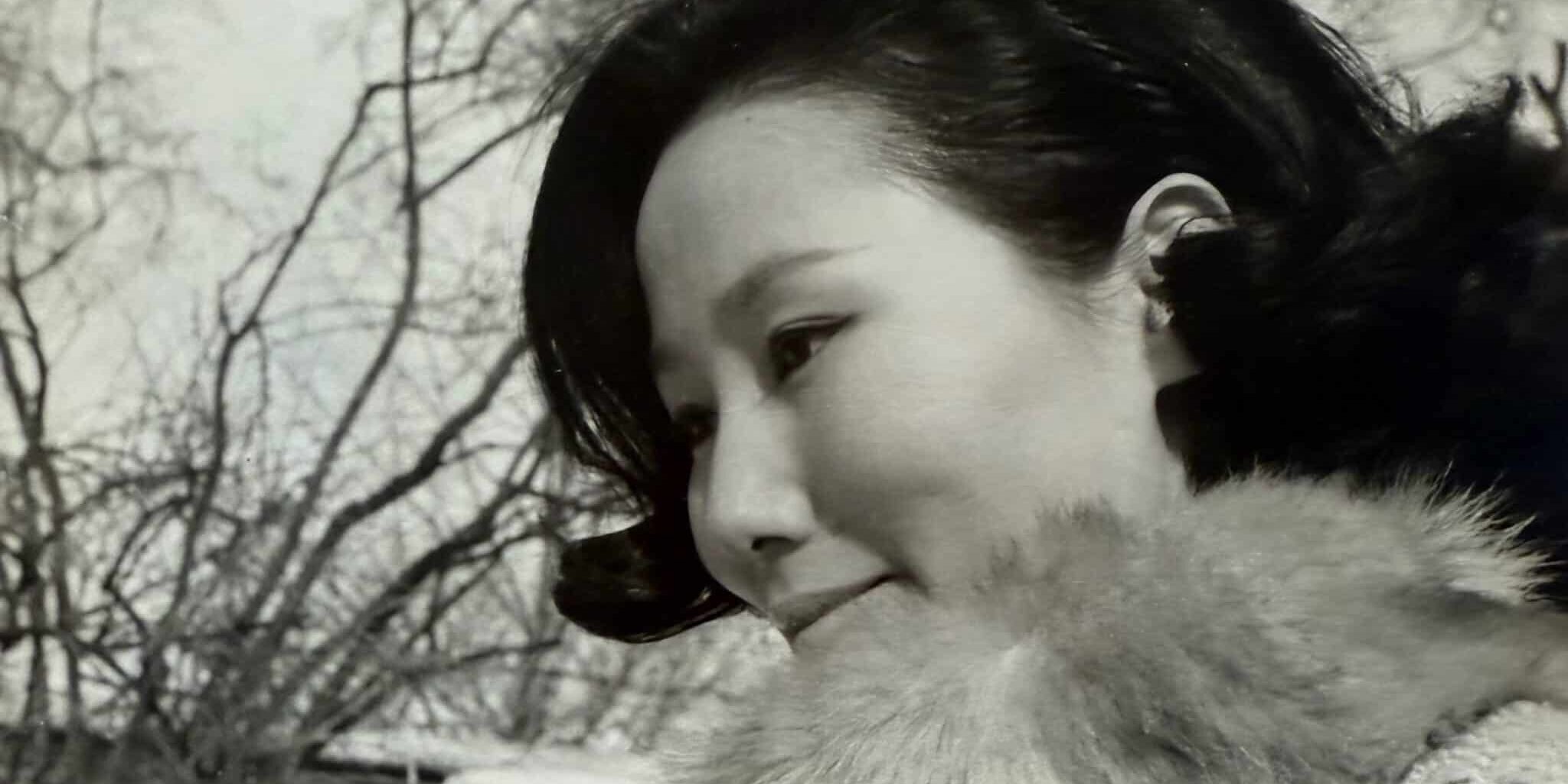
My mother closes her eyes at the moment of the camera shutter. She has done it all her life without meaning to, and the result is a running joke in our family, that she does what she wants, not what she is told. My mother is a beauty. At a time when the average Korean woman stood five foot one, my mother was five foot seven, graceful and athletic. She hated to stand out, but with her height and good looks, there was nowhere to hide.
She comes from an old aristocratic family whose first names are dictated by a lineage book that goes back five centuries. She grew up in a village so dense with her own kin that her teacher was an aunt, the doctor was an uncle, and the children she played with were cousins, all of them Mins. Her father died when she was 12, and his young widow and seven children fell back on relatives. My mother, his favorite, was inconsolable. She learned, then, the sting of poverty, and the more particular sting of being poor among one’s own kind: that the kindness of kin is always double-edged, that it must be received in a certain posture. She loved beautiful things that she couldn’t afford, but she was proud, and had siblings who soon closed ranks, the older ones working so that the younger ones could study and attend college. As adults, they would be the ones handing out the charity.
She studied by candlelight, and passed the rigorous examinations that admitted her to Sookmyung Women’s University in Seoul, which for a fatherless girl from Gimpo, was a feat that her village has never forgotten. It was at college that she met my father, on a group date. He was not her assigned partner, but she caught his eye. Her assigned partner, who was also smitten, wanted to see her again. My father took him out for a talk, and there was, my father likes to tell us, a full night of drinking, negotiating, and pleading, before her partner finally relented and ceded his dating rights to my father. The two friends were students at Seoul National University. My mother might have ended up married to either. She has always been pleased that my father persevered. She soon learned that like herself, my father was raised by a single mother, and that as the eldest son, he and his future wife would need to care for his mother as long as she lived. She understood, and did exactly that.
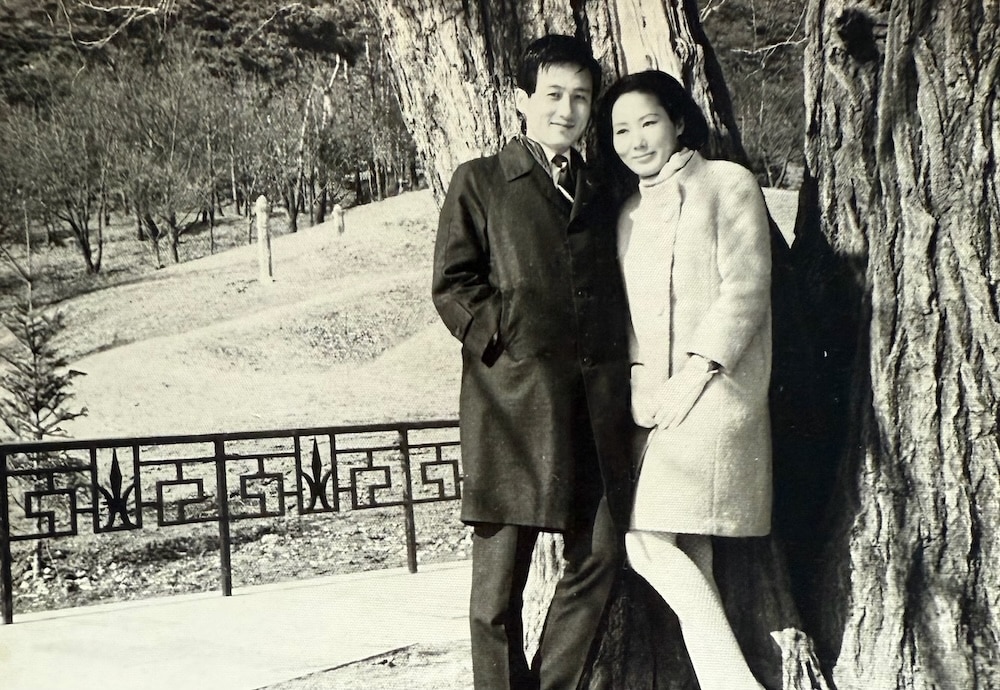
My mother and father, 1968, Seoul.
In 1969, she married him at the YWCA. I know this because their wedding photo has the signage proudly showing at the top. I always wondered why they married at a gymnasium, but the YWCA in 1960s Myeongdong was much more than a place where people played basketball. The Korean War had flattened Seoul to rubble only a decade earlier, and the YWCA was a three-story beacon of modernity, especially for women’s rights activism. In an era when ambitious college-educated women faced sharply limited career opportunities, and wives had no marital rights, it was a place where controversial topics such as banning concubines and promoting gender equality were discussed and demonstrations organized.
In 1976, with the great wave of Korean immigration to the United States already well underway, my parents, together with their mother and two small children, crossed the ocean and settled in Audubon, Pennsylvania, a middle-class neighborhood, in a cookie-cutter colonial with a swimming pool, which was, for them, the precise version of the American dream they had come for. When my father’s company offered to move us to the Main Line and help enroll my sister and me in one of the exclusive private schools there, my mother immediately dismissed the idea. She hated, more than anything, rich people who put on airs.
She is eighty this year. She is a doting mother of two daughters but never quite stopped mourning the son she lost, between us, late in a difficult pregnancy that left her bedridden for almost a year. She is now the grandmother of four grandsons, who adore her. She was, and still is for the most part, ferocious on a golf course. In the past few years, she has become more fragile. She missed her own eightieth-birthday party this year because of a sudden illness that made her afraid to fly. I had not been thinking about any of this on the afternoon I found her, more than half a century later, in a wicker basket in Brooklyn.
I had been in Williamsburg, instead, taking care of my son and his fiancée, who had food poisoning. By late afternoon the kids were starting to stir out of their stupor, and it was time for me to go back home to Manhattan. It was a beautiful day, and I was famished, so I took a detour for a bite to eat at L’Industrie, the famous pizza place I had been meaning to try, then noticed a charming antique store on my way to the subway.
The shop was the usual kind. Brass lamps. Lots of old chairs and tables. Cabinets I had no room for. Teacups in patterns that would have belonged to my grandmother if she were white. I moved slowly and savored this time I had to myself. Near the register, on a low shelf, sat a wicker basket of old black-and-white photographs, the sort of basket I have always passed by in shops like this, wondering why people would buy photographs of other people’s families. I cannot say what made me reach in.
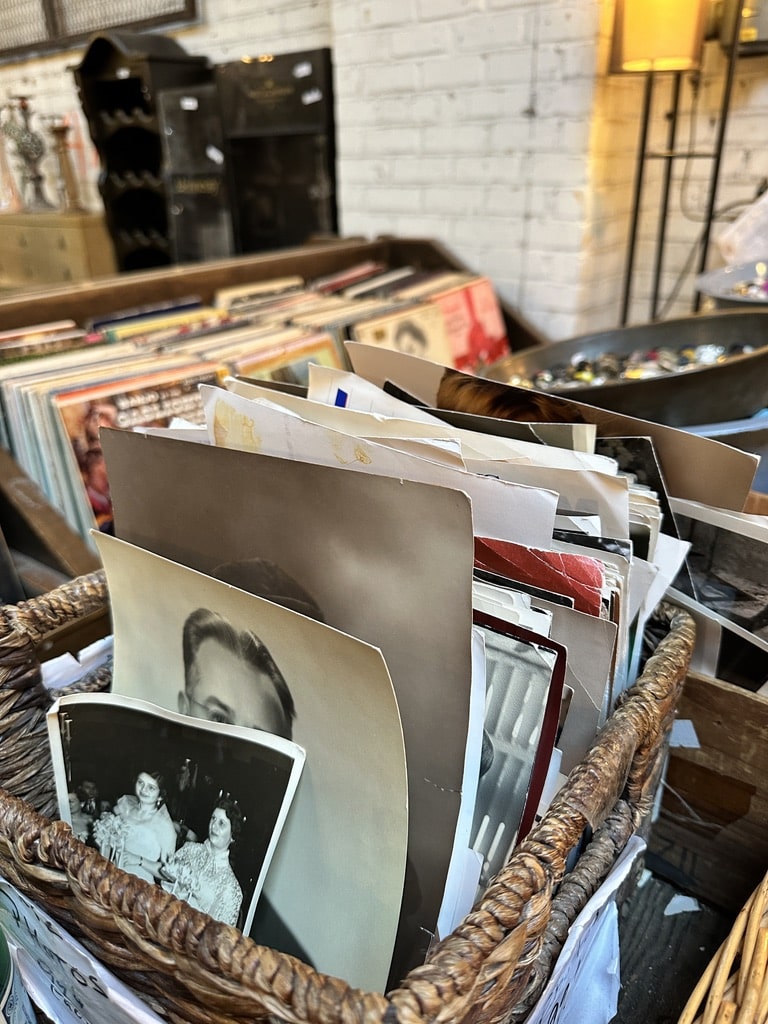
A basket of photos I found in a Brooklyn antique shop, May 2026.
About halfway through the stack I came upon a large black and white wedding photograph that had a familiar look to it. The YWCA sign at the top of the photo told me it must have been taken at the same wedding hall where my parents were married. A fun coincidence. The hair, the lapels, the careful arrangement of the wedding party told me it was roughly the same era. I scanned the faces of the guests for no particular reason. Then I saw a young woman in a flip hairdo, with her eyes closed.
It was my mother.
Her clothes, in the photograph, are not really visible. But the hair is unmistakable, the curl turned fashionably outward at the shoulders, and so are the closed eyes. I quickly scanned every other face and recognized no one. I looked back at my mother. The photograph cost ninety-nine cents, $1.06 with tax. I gave the cashier two dollars and told her to keep the change.
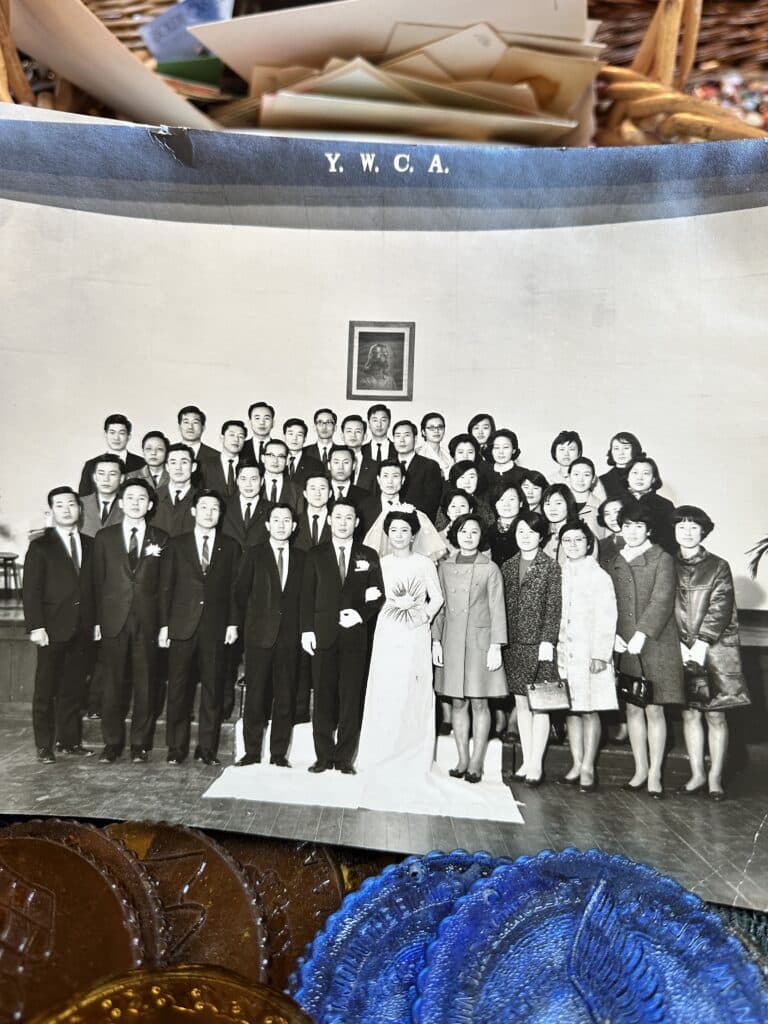
The wedding photograph discovered in Brooklyn, 2026.
I sent the picture to my family that night. My mother wrote back nonchalantly that yes, it was her. No, she did not remember the wedding. The strangeness of the situation had not yet dawned on her. A day later she was intrigued and called her best friend from that period, who has a memory for these things. Her friend remembered the day. She was standing next to my mother in the photo, but her face was partially hidden. They worked together at Yukong Energy, and the bride had been a fellow secretary, an English major from Ewha Women’s University. The groom, like my father, had come from Seoul National, and he too was considered a catch. Their courtship, she said, had been passionate, which in the vocabulary of that generation meant something more pointed than it does now.
I have been turning the photograph in my hands for days. Someone threw it away. A child, perhaps, going through the closet of a parent who had died. A grandchild who did not recognize anyone. A cousin in a hurry. The picture passed through whichever hands it passed through and ended up in a wicker basket in Brooklyn, where I happened to be because my son had eaten the wrong thing the night before. If I had not stopped at L’Industrie. If I had taken my usual route instead of a pizza detour. If the basket had been moved to the back of the shop the day before. There are a great many ifs, and my mother survived all of them.
I think about the bride. I think about her grandchild, who may live a few blocks from my son’s apartment and who may have donated a pile of old things she no longer had room to keep. I think about the photographs my own children will sort through one day. I think about the women of my mother’s generation, who married in their twenties at the YWCA in Seoul to the proper sort of men, and who are now in their late seventies and eighties. The bride in the photo passed away some years ago, something we learned from my mother’s friend.
I put the photograph in a well-lit corner of my kitchen when I got home. My mother is in it, eyes closed. She is the most beautiful guest at the wedding. She is at the YWCA in Myeongdong and is not envious because she too will soon be married to her own Prince Charming whose friends were so many that they had to wrap around to the bride’s side for the photo. She has no idea that her daughter will find her, more than half a century later, in a shabby basket in a borough of a city she has never lived in, for ninety-nine cents.
I think that young lady would like Brooklyn. An understated neighborhood that doesn’t put on airs, a place where ambitious women don’t have to be secretaries. She would like the pizza, and she would smile at the world around her, one where her soon to be granddaughter-in-law will recover from food poisoning and go back to her job running a billion-dollar AI business unit, with many young men reporting to her.
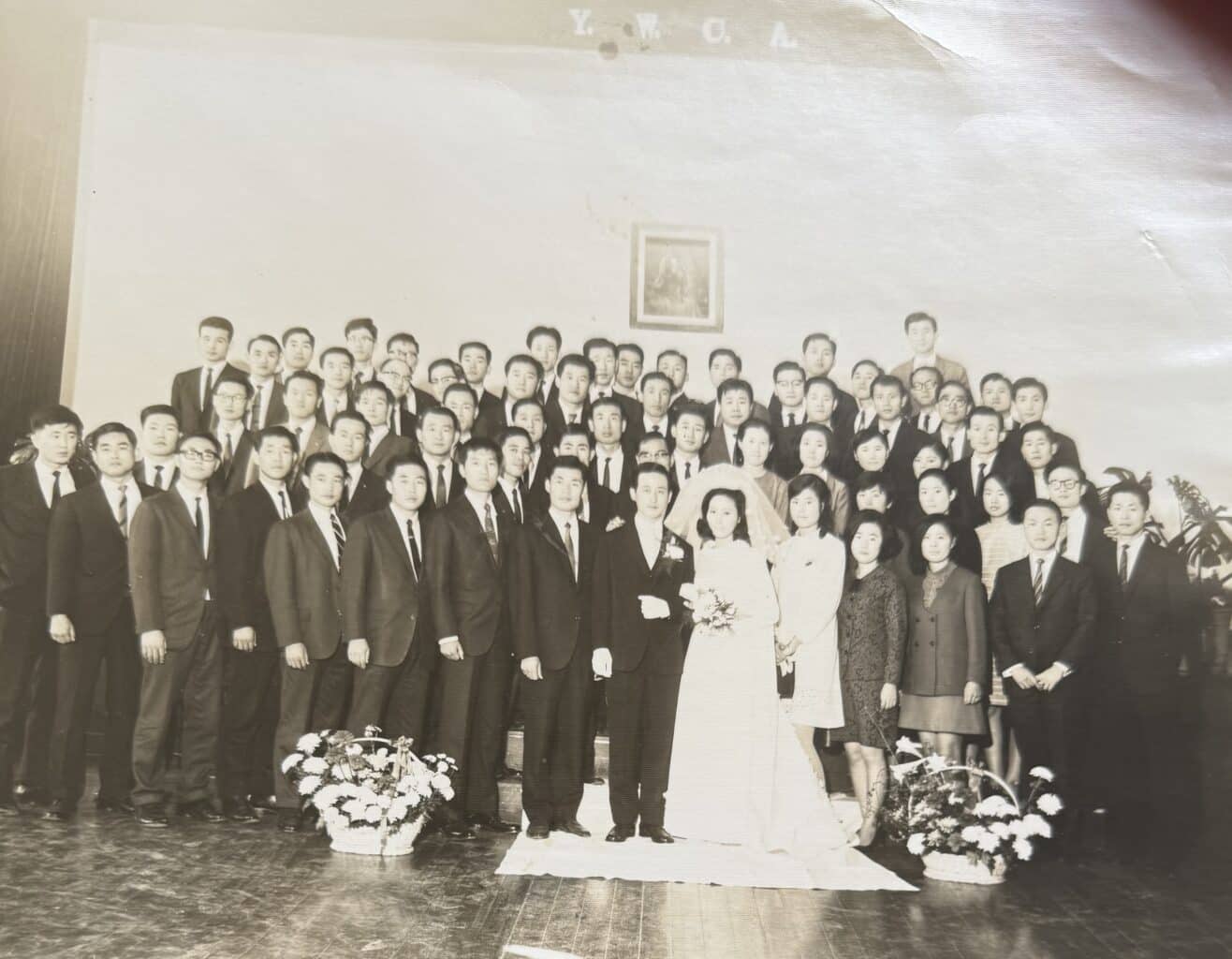
My parents’ wedding, Seoul, 1969.