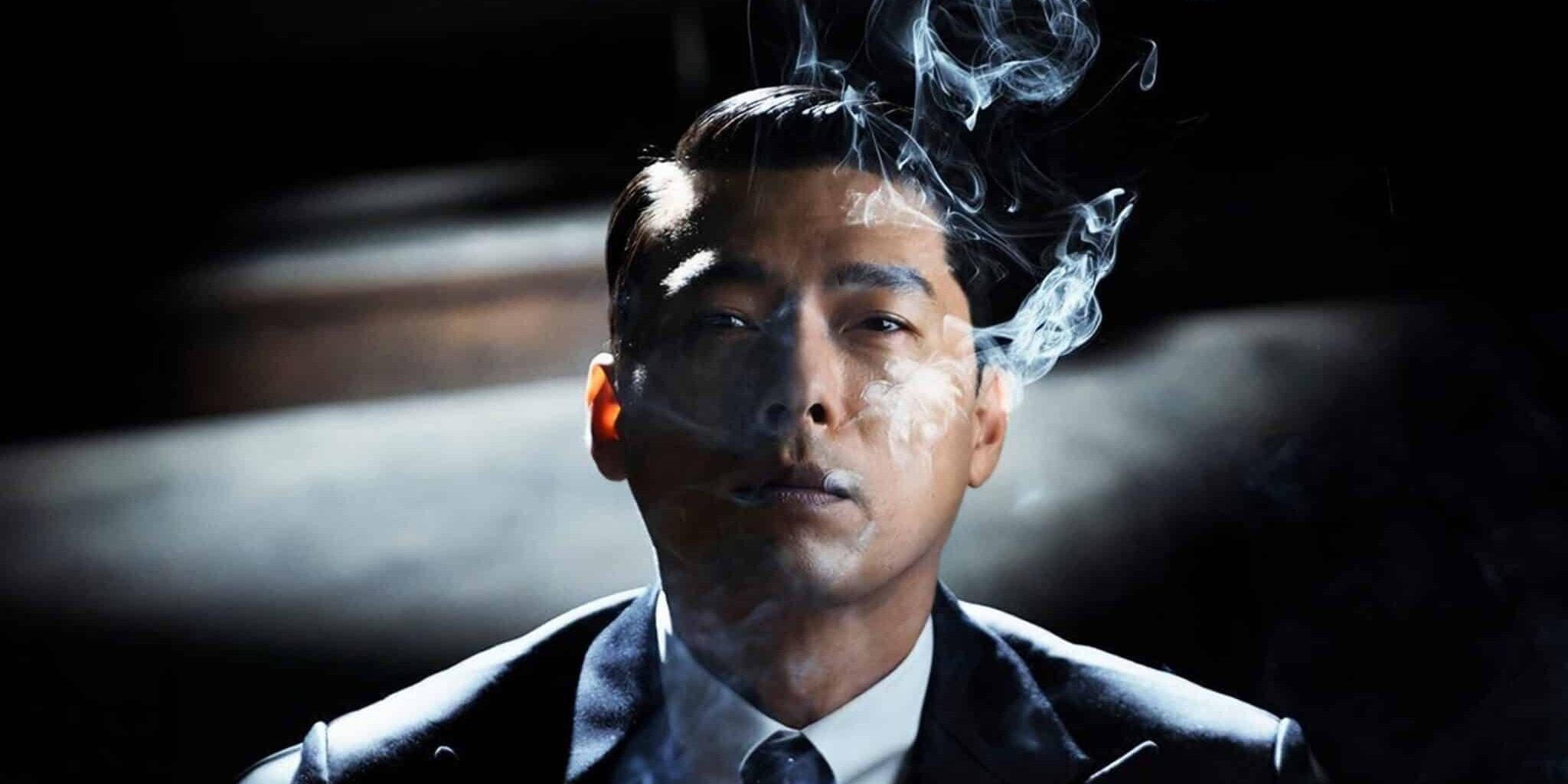
In a recent piece on Made in Korea, The Korea Times offered a blunt and perfectly accurate observation: “Hyun Bin is outrageously handsome.” The series knows this, of course, and uses his mesmerizing good looks as a driving force in this wildly entertaining thriller. Built on action and intrigue, Made in Korea is a slick retro K-drama from Disney+ that weaves fictional characters into real historical events. Another A-lister, Jung Woo-sung, holds his own as the protagonist, but it is Hyun Bin that carries this action packed drama, at least in this first season.
After the global success of Crash Landing on You, Hyun Bin became Korea’s emblem of the romantic good guy. Made in Korea delights in reversing that image. Here, he plays Baek Ki-tae, a figure of hard-edged ambition in 1970s Korea, climbing upward with the cold focus of someone who believes rules are for other people. For the role, Hyun gained thirty pounds to create the oppressive presence he felt he needed in order to portray a powerful official from that era.
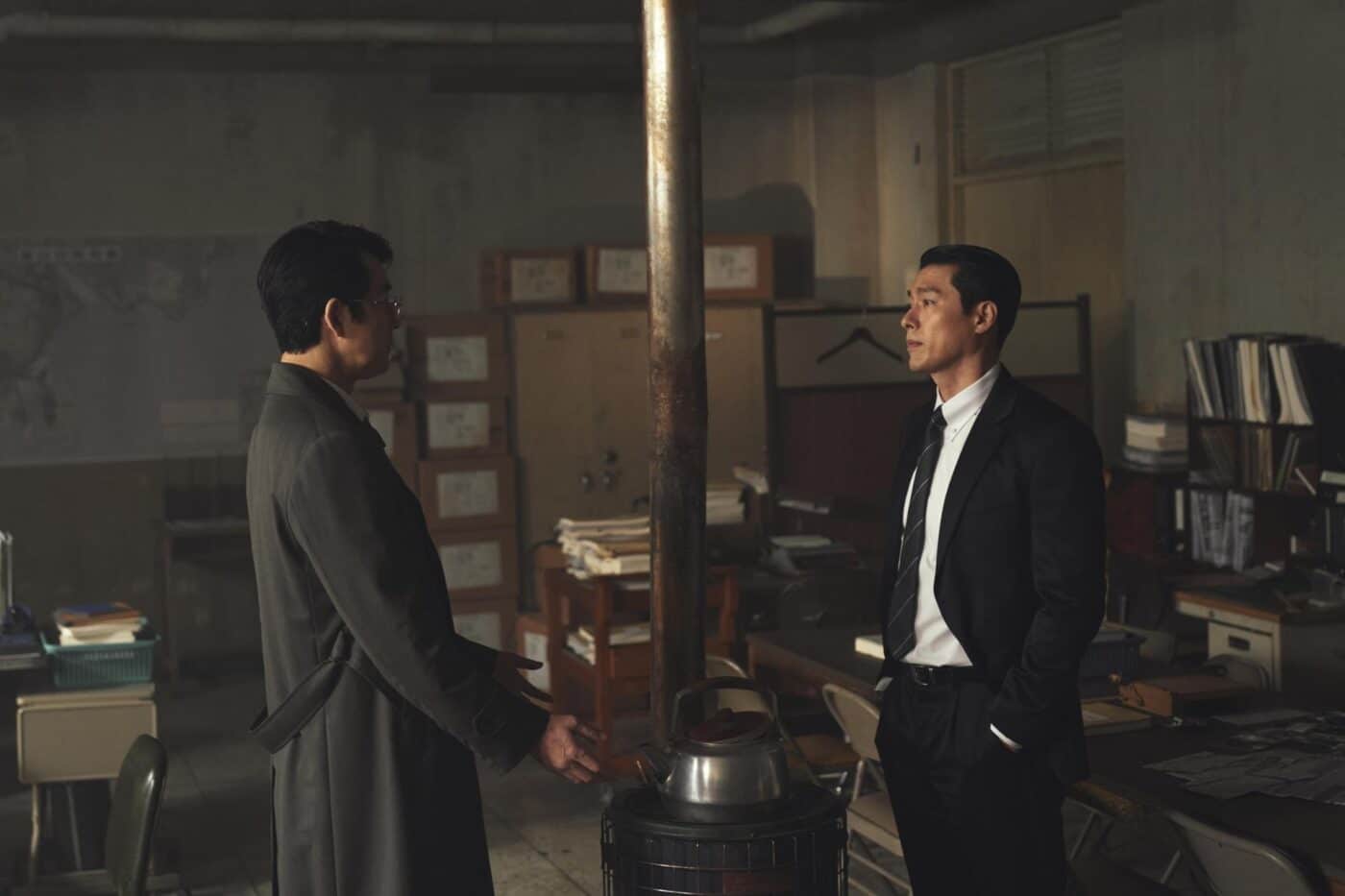
The show’s tension rests on a long tug-of-war. Baek, a KCIA agent operating above the law, faces off against Jang Geon-young (Jung Woo-sung), an upright prosecutor who refuses to quit. Baek is unconcerned with moral consequence, while Jang relentlessly pushes forward for justice, even as evidence disappears, superiors interfere, and the machinery of the state closes ranks.
Director Woo Min-ho is no stranger to Korea’s 1970s. Films like The Man Standing Next and The Drug King have already shown his fixation on the era’s turbulence and brutality. In Made in Korea, he returns to the tumultuous decade that had enough real-life drama to fuel countless films and television shows.
Here are six ways Made in Korea mixed real history with fiction:
1.The 1970 Japan Air Lines Hijacking
The series opens with a plane seized by Japanese revolutionaries. Passengers scream. Transmissions of Mayday, Mayday, are cut short as the pilot is held at gunpoint—this chaos mimics the real-life hijacking of Japan Air Lines Flight 35, often referred to as the “Yodo-go” affair, which occurred on March 31, 1970. The hijackers, members of the radical Japanese Red Army Faction, intended to fly to North Korea, but were tricked into landing at Gimpo Airport in Seoul, South Korea.
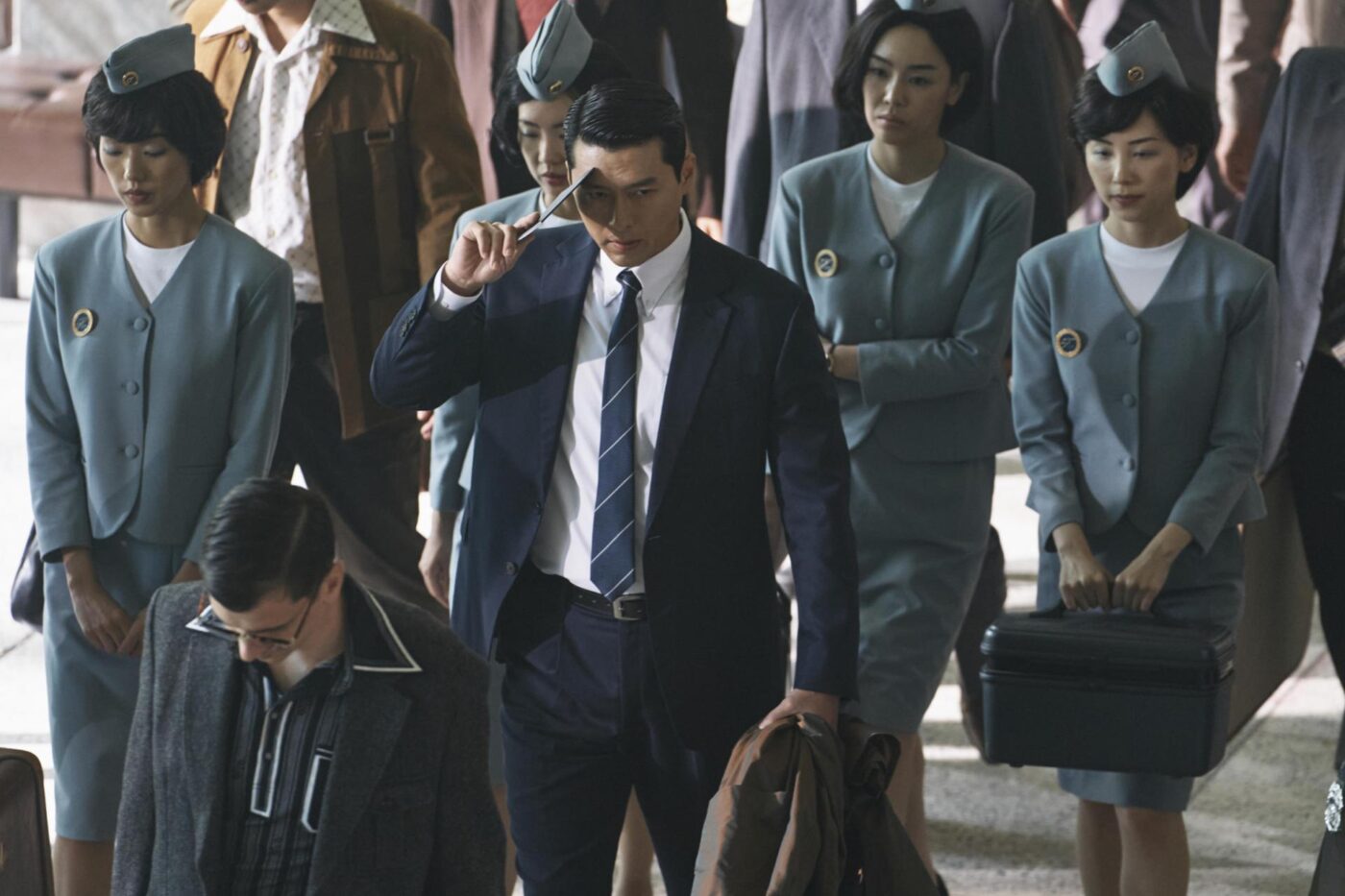
The hijackers eventually realized the deception after spotting a Northwest Airlines plane with U.S. markings on the tarmac and hearing American jazz music playing in the terminal, which was not the “welcoming committee” they expected in a communist state. A total of 138 people were on board the plane, including 9 hijackers and 7 crew members.
To resolve the standoff and secure the release of the hostages, Japan’s then-Vice Minister for Transport volunteered to take the place of the passengers and crew. The hijackers then successfully flew the rest of the way to Pyongyang’s Mirim Airport, where they were granted political asylum by North Korean authorities. Most of the hijackers remained in North Korea and are still living there, with some continuing to be on Japan’s international wanted list.
Made in Korea takes a spin on this historical event with a double hijacking. Baek Ki-tae is a passenger on the plane and sets the rescue into motion by slipping a message to his cronies. The hijacking provides introductions to the president and KCIA of the 70s—corrupt powers who run the country with an iron fist.
2. The Brutality of the KCIA
No institution looms larger over Made in Korea than the KCIA. In the series, the agency operates above the law, surveilling, intimidating, and eliminating threats with quiet efficiency. Prosecutors are blocked. Evidence disappears. Orders travel downward without explanation. The message is simple: the state decides what justice means.
This is not dramatic exaggeration. The Korean Central Intelligence Agency, established in 1961 under President Park Chung-hee, functioned as far more than an intelligence service. It monitored political dissidents, infiltrated universities, censored the press, and detained citizens without due process. Interrogations were notorious for torture. Confessions were often extracted through beatings, electric shock, sleep deprivation, and psychological coercion. Fear was central to its power.
One of the most infamous examples was the 1973 kidnapping of opposition leader Kim Dae-jung in Tokyo, widely believed to have been carried out by KCIA agents. Student activists, journalists, and political rivals routinely disappeared into interrogation rooms. Many emerged broken, and some never emerged at all.
In Made in Korea, Baek Ki-tae embodies this machinery. The drama captures the atmosphere of the era with unsettling precision. The law is subordinate to power, and power wears the face of the state. The KCIA in the series feels omnipresent because, in 1970s South Korea, it largely was.
3. Two Powerful Rivals Close to the President
Park Chung-hee’s innermost circle included two of the most powerful men in his government: Cha Ji-cheol, the head of the Presidential Security Service, and Kim Jae-gyu, the director of the KCIA. Their tense relationship and competing influence at the center of Park’s rule have become a defining part of how that era is remembered. Made in Korea recreates this rivalry through the characters Cheon Seok-joon, Chief of the Presidential Security Service, and Na Yongcheol, Chief of Staff to the President.
In the series, these two figures sit at the top of opposing camps. Na supports Prosecutor Jang, while Cheon stands behind KCIA agent Baek Ki-tae. Like Park’s real-life advisers, their positions carry enormous authority, shaping the balance of power around the president.
Cha Ji-cheol was known for his growing control over presidential security and his closeness to Park. Kim Jae-gyu, meanwhile, had risen through the military and intelligence ranks to become KCIA director, one of the most influential posts in the regime. In Made in Korea, as in history, the struggle between these men is both political and personal, marked by constant scheming and maneuvering as each attempts to gain the upper hand.
4. The Courtesan Rumored to Have Had a Son with President Park
Made In Korea dedicates the entire third episode to Cho Yeo-jung’s character, Bae Geum-ji, a glamorous madame who entertains top-ranking officials at an exclusive hostess club. Her end parallels the unresolved murder of Jeong In-suk, who was found dead, bearing a bullet to the head and through her chest, in the backseat of her jeep.
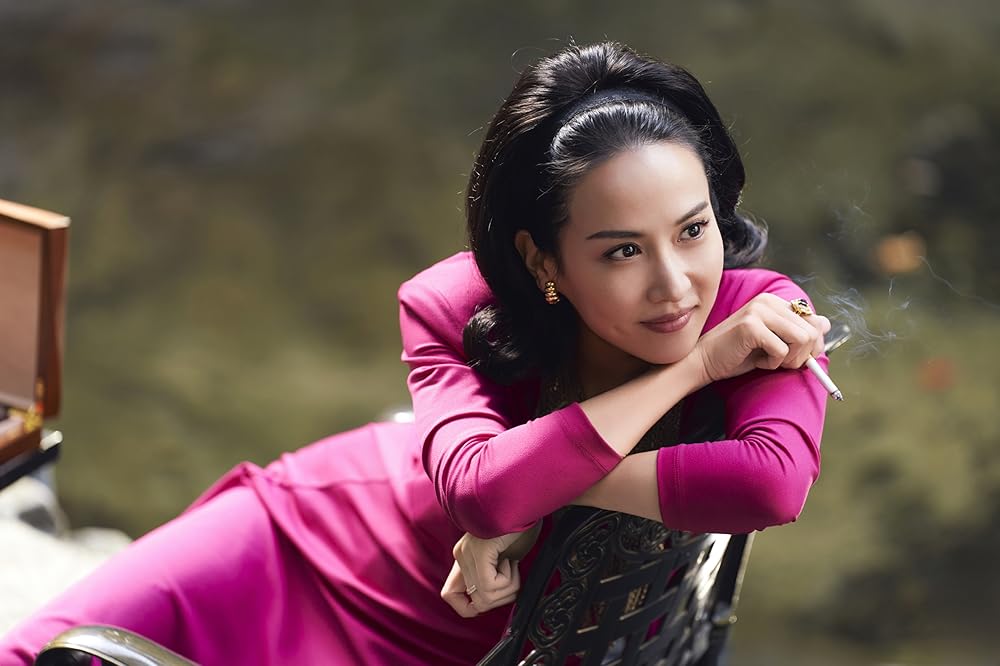
The show includes the real details: In-suk’s 3-year-old son with an unknown father, a notebook that kept the names of numerous dignitaries she slept with, and speculations about the father’s secret identity, with President Park Chung-hee rumored among them.
While Ki-tae kills Geum-ji on screen, police records showed that it was In-suk’s brother, displeased with his sister’s history with men, who shot her. To make it appear as an accident, they said he shot himself in the leg, then tossed the pistol out the window. Mr. Jeong first denied, then confessed his guilt, and was sentenced to 19 years in prison. Tidy case closed.
Here comes the twist: upon being released in 1989, Mr. Jeong insisted that he had been forced to confess by a big-time politician who promised leniency as a reward. Two strangers sent by the government had shot him and In-suk. He claimed that Prime Minister Jeong Il-gwon was the baby’s father. The father remains a mystery: when In-suk’s son flew from the US to Seoul for DNA testing, the former prime minister refused.
5. Korean-born Japanese residents: Zainichi
As Zainichi (ethnic Korean residents in Japan), Baek Ki-tae and his drug trade business partner, Yu-ji Ikeda (Choi Yu-ji), are seen as disposable. Yu-ji, adopted daughter of Chairman Ikeda, the boss of the Yakuza clan trafficking meth, lost both her parents when she was thirteen. Despite Yu-ji’s Korean descent, Chairman Ikeda treasures her as one of his own, entrusting her with a high position in the organization. But he makes it clear that he will readily destroy her if she proves unuseful.
Zainichi have historically faced systemic discrimination in employment, education, and legal rights in Japan. Threatened by Baek’s intrusion into their business affairs, the Japanese underboss sneers that Zainichi like Ki-tae reek like pigs and dogs. Ki-tae is no stranger to this racism and plots to exploit it.
As a Zainichi orphan raising his two younger siblings, Ki-tae learned to be tough, a trait that later turned into something more sinister after a harrowing, near-death experience during the Vietnam War. Baek’s own words expose his philosophy on power: ‘The world is a battlefield for the powerful. Someone else’s death becomes someone else’s chance… If you don’t want to be looked down on, strike first. If someone blocks your path, get rid of them.’
6. Drug Ring in Busan
Director Woo Min-ho has always been drawn to the darker corners of Korea’s modern history. His film The Drug King took its name from an actual term used in Korean newspapers and followed the true story of Lee Doo-sam, a notorious drug trafficker who operated in Busan during the 1970s.
In that period, Japan’s strict drug laws and high demand helped turn Korea into a manufacturing and transit point. Drugs produced in Korea were trafficked across the sea, feeding criminal networks that stretched beyond the peninsula.
Made in Korea draws from this same historical atmosphere. Though the series is fictional, it is steeped in the realities of Korea’s drug manufacturing past, and it folds in another documented thread of the era: North Korea’s use of state-sponsored trafficking to earn foreign currency. Woo’s drama does not present itself as a history lesson, but its world is unmistakably shaped by real systems that existed, where narcotics were not just street crime but part of a wider economy of survival and power.
For Baek Ki-tae, the drug trade becomes less a vice than a ladder. In a society ruled by hierarchy and force, money is the only reliable way upward.
My Family, Made in Korea
The show’s decision to cast the beloved Hyun Bin as the face of such a brutal period in Korea’s history makes it hard to separate fiction from reality. This is a Korea I never heard about growing up, even though my family lived through it before immigrating to the United States.
My grandparents are from Busan, and my mother, born in the early 1970s, spent her first nine years in Korea before moving to America around 1980. My grandfather worked for the Korean government, helping facilitate the U.S. rice trade. It feels strange to imagine that the violent world of Made in Korea could have existed right alongside my family’s everyday life.
Season 2 Wraps in March
When Made in Korea returns in the second half of 2026, the story will advance nine years later. Director Woo teases new versions of our favorite opponents. Jang Geon-young, whose last appearance was crushed and cornered by Ki-tae’s final blow, will return “armed with weapons of his own.” We can’t wait to watch these two heavyweights go head-to-head again.